A family testimony
Pavol Bučan’s MemoirThe Journey Home
My great-grandfather’s account of imprisonment, a death march, escape, and his return home in 1945.
Based directly on Pavol’s memoir, with his reconstructed appearance based on genuine family photographs of his face. Historical scenes and narration are AI-generated; the family photographs and typescript in the ending are authentic.
Contains accounts of persecution, violence, illness and death.

The complete written story
A Prisoner’s Memoir
The film opens a door into Pavol’s story. The illustrated memoir preserves the full account, with family photographs, historical notes and individual image credits.
Read the English memoirOpen the illustrated English memoir
The reader loads when opened.
Read this page as text

For the historical record
The original typewritten pages
All 19 photographed pages of the preserved typescript, including its original corrections and marks. The PDF includes two introductory pages.
Open the photographed original PDF · 21 pages · 37.9 MBThe illustrated books predate the documentary’s portrait research: their historical illustrations are interpretations, not archival photographs or verified likenesses of Pavol. Authentic family photographs, illustrations and their individual credits are identified in the editions.
Five generations
A story kept in the family.
Now shared beyond it.
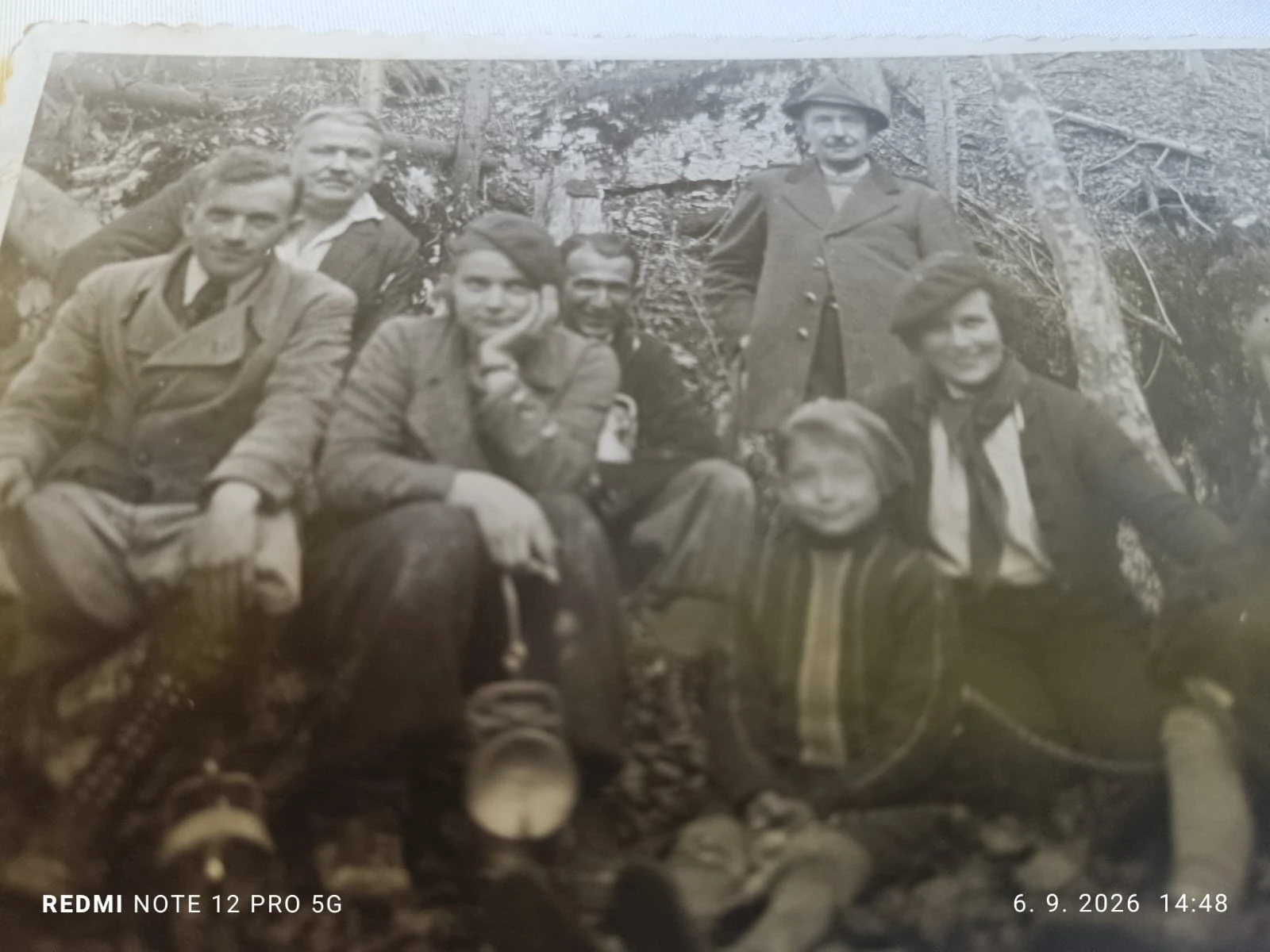
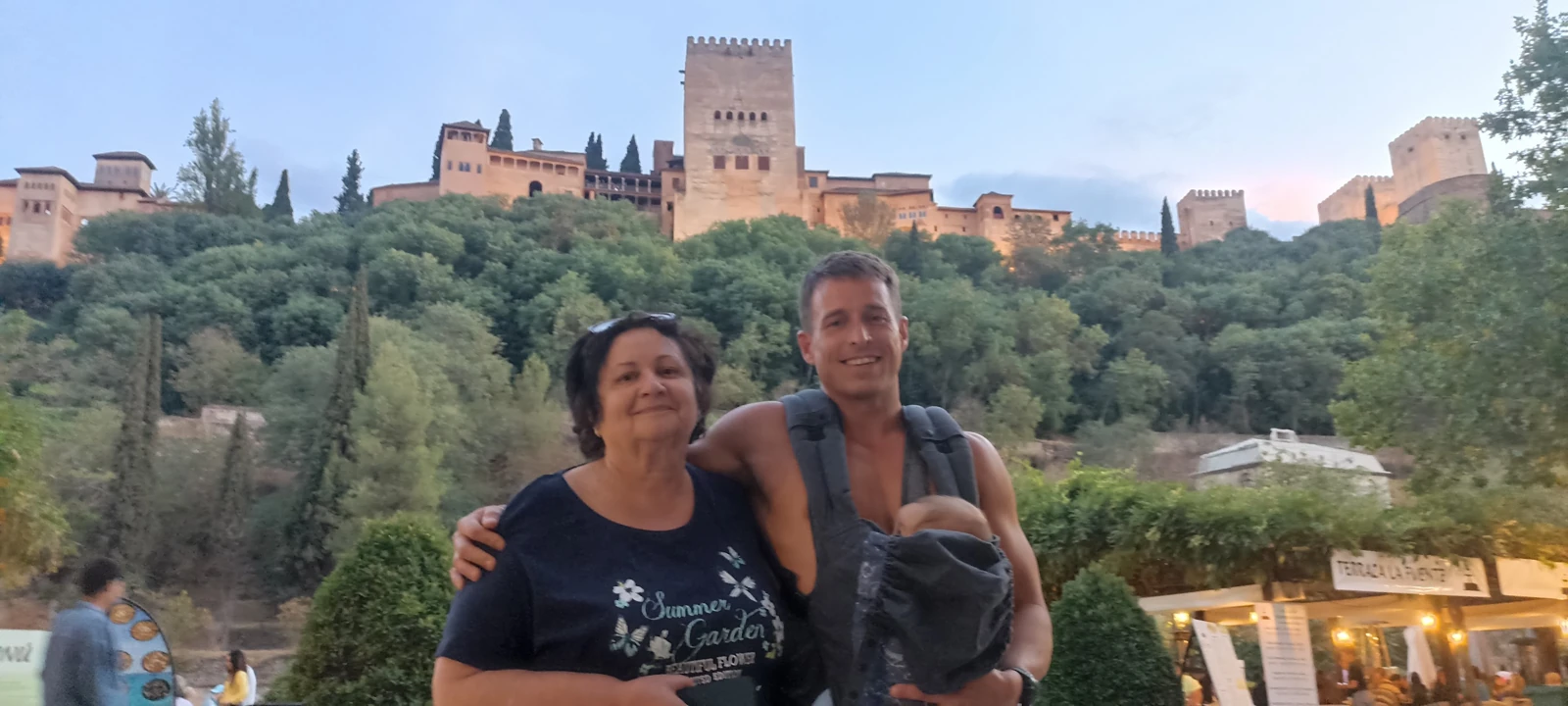
Pavol Bučan wrote down what he had lived through. His son, my grandfather Ivan, transcribed and edited the original. Ivan’s daughter—my mother, Odetta Peniaková—kept that transcript safe for decades.
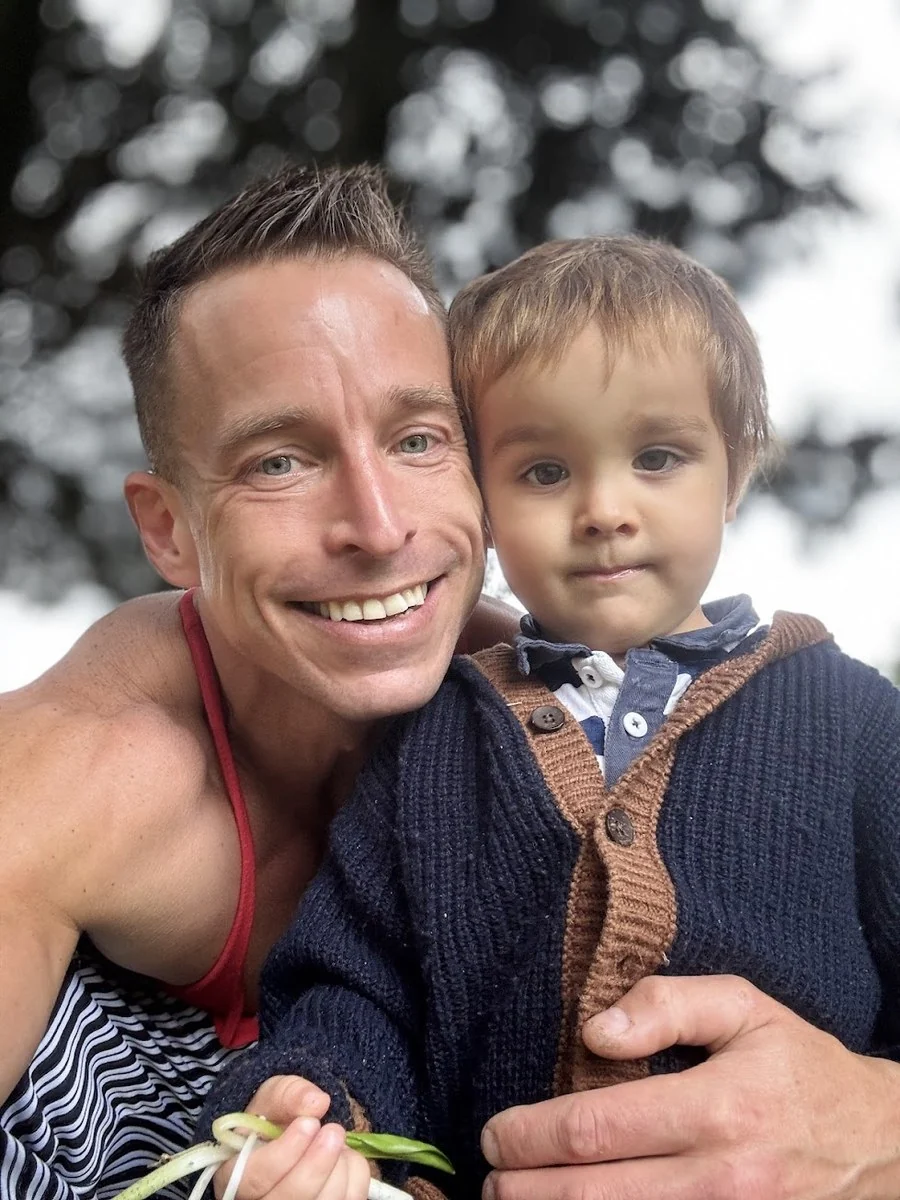
I made this documentary from the testimony they preserved. It follows Pavol’s journey back to his family, and ends with the generations that followed him, including my son Oliver.
- 01Pavol BučanWrote the testimony
- 02Ivan BučanTranscribed and edited it
- 03Odetta PeniakováPreserved the transcript
- 04Martin PeniakMade the documentary
- 05OliverThe next generation
The written testimony
The words came first.
The film follows Pavol’s memoir of Nazi imprisonment, including Sachsenhausen, a death march, his escape, and the journey home. In his account, he reached home on 22 July 1945.
“Pred nami je život v mieri a pokoji.”
“A life of peace lay ahead of us.”
A short fragment of the preserved typescript appears in the ending, bringing the film back to the words that began it.
How the documentary was made
The historical narrative is based directly on Pavol’s memoir. His reconstructed appearance is based on genuine family photographs of his face. The historical scenes are AI reconstructions, not archival footage. The narration is also AI-generated, not a recording of Pavol’s voice.
The ending brings the film back to authentic photographs and a brief typescript fragment. It includes a quotation from the dedication to Ivan in my 2014 doctoral thesis. These materials are identified separately from the reconstructions.
The images offer an interpretation of the testimony; they are not independent evidence of precisely how an event looked. The family account remains the starting point.
What we carry forward
For the people who come after us.
In 2014, I dedicated my doctoral thesis to my grandfather Ivan:
“Through his example, he taught me to never give up, to be perseverant and fight for my dreams.”
This film is another way of carrying that inheritance forward. I want Oliver to be able to encounter these people through their photographs and words—and for others to hear the testimony our family kept.
Read alongside the film
English narration transcript
Text from the final English subtitle file, arranged into reading sections. This is the film’s narration, not a complete edition of the original memoir. Bracketed notes describe the anthem interval and family ending.
Download English subtitles (.srt)
Open the English transcript
Imprisonment and forced labour
On 14 January 1945, a long train with barred windows stopped at an unfamiliar station. The German military guards opened the carriage doors and roared: “Los, los!” We tried to get out as quickly as possible so that the guards would not vent their hatred on any of us.
A large sign on the station building announced that we were in Oranienburg. Beside me walked our singer Jenko Harach, who sang even where others wept and who had suffered with me in the prisons of Prievidza, Nitra and Sereď. Slovak miners from Handlová had also arrived with me. Among them was my friend, old Schmidt, who had worked in the Handlová mines for
30 years and was now walking here with me towards an unknown fate. At the gate we saw the name Sachsenhausen. In the barrack they registered us, shaved us and gave us ragged prison clothes and wooden clogs. Each of us received a little piece
of white cloth on which he had to draw his assigned number with an ink pencil. I was given the number 123357. Above, behind the number, we drew one red triangle, and below it the letters SL. These stood for “Slovak political offender”. The hardest thing was having to learn
our prison numbers by heart and report them in German. About a week later they took us to the station, and we travelled by train through the ruins of Berlin. A tram took us to the edge of Berlin, where there was a small concentration camp, Lichtenrade, and again a long, high wall,
barbed wire and a gate with SS men standing at it. The camp had been built for 280 prisoners. The next day we travelled by tram for almost 2 hours through the ruins of houses. We got off in a small square,
were given pickaxes and shovels, and had to clear away the rubble of buildings. I look nearby and see the street name Wilhelmstraße. It is a very long street, with most of the surrounding houses in ruins from the bombing. I was bent over picking up bricks when a parcel suddenly landed at my feet. I quickly picked it up and hid it under my shirt.
I opened it with one hand and could smell salami, cigarettes and chocolate. Then I realised that not every German was a fascist. I looked at the guards to see whether they had noticed anything, but I see that something is stirring among them. One guard came over to me, wrote down my number, shouted something at me and took the parcel away.
Then I realised what awaited me: hanging, being tied up and suspended, or a terrible beating. My friend the builder, who knew German well, was working nearby. I turned to him and asked whether he would try to persuade the guard not to report it. He agreed and spoke to the SS man.
Then he came and told me it was settled: the guard had been persuaded and would not report it. We went on working, hungry and frozen through, and grew terribly thin; yet some prisoners would still sing in the evening. The unpleasant cold still continued.
One day at work I felt a sharp stabbing pain beneath my left shoulder blade, and swelling began to form around my eyes. When the pain would not stop and I began to swell up, the doctor ordered me to stay in a room for the sick. I shall never forget the complete silence that fell after the
prisoners had left for work. It was broken by the steady tread of military footsteps. The door opened and the all-powerful SS man came in. With his stick he lifted the blanket on my bed, checked whether I was still alive, and left. My illness did not improve,
so they sent me back to Sachsenhausen with five other prisoners. And so I found myself once more in dreaded Sachsenhausen, that terrible camp where a human life means nothing. At last I was assigned to the prisoners’ hospital, which they called the “revír”, where I could at least lie down and have my temperature checked.
The sick men lying there said, with fear in their eyes, that an SS doctor came to examine them and was constantly giving experimental inoculations, producing various sera with which German soldiers were then treated. I too received many injections and had blood taken several times, but nothing helped me.
The death march
Soviet troops were drawing closer, and the camp was being emptied in haste. They drove us out of the barracks and into a long line to leave. While we were still at the gate on our way out, a German detachment of SS men with a commander surrounded us, and we were off. They drove us northwest, towards Neuruppin. We marched all day.
Various shrubs and little plants were already growing beside the roads along which we marched. I did not know some of them, so I asked my neighbour whether he knew them. He looked at me in astonishment and said he was surprised that, in such a state, I was still interested in nature.
I told him that I did not want to die yet, that I wanted to return home and felt supported by nature in this wretched state. My friends, with whom I have endured that dreadful abuse and torment from the beginning, are slowly disappearing and dying. Their graves are mostly just the ditches beside
the roads we have already travelled. Near Parchim, one guard, a Hungarian SS man, told me we should escape because they had been ordered to shoot us. From that moment I kept thinking that I had to escape. Under no circumstances did I want, at the end of all that evil,
simply to let myself be shot without doing something to prevent it.
Escape
Only my nearest neighbour, a former partisan, young Jožko Kovalčík, told me that he would try to escape with me. We agreed that I would pretend to be very ill and weak, that he would accompany me and that we would gradually fall behind the main group. Everything happened as we had agreed, and beside that wood,
at the signal, we leapt away and ran into the trees as fast as we could. The guards opened fire on us, the bullets rattled against the trees all around us, and we ran on with the last of our strength. We went on into a second wood, where we found an abandoned shelter. We made a little roof of branches over it and, exhausted almost to death,
slept for the first time as free citizens, at liberty. In the morning we searched the wood for something to eat, but found nothing except young nettles, which we seasoned with red salt and ate. We survived here like this for 3 days. After three days we went further.
In the wood we found some lorries. Once we had made sure nobody was inside, we discovered sacks of soya beans and almonds. We ate, changed our filthy clothes for clean ones and packed food into rucksacks. Then we set off towards Parchim. We reached a large farmstead. In the barn we found former prisoners,
including Slovaks, who gave me a piece of raw pork. In the empty rooms I found a civilian coat and a hat. I took utensils from the kitchen. We built a fire in the yard, and over it I fried pork in a pan and boiled potatoes in a pot; I had found the potatoes there too.
Darkness was slowly falling. The meat in the roasting pan was almost ready and the potatoes were cooked when a loud rumbling came from the road, by which we knew that tanks were approaching. Three tanks stopped in front of the farmstead, soldiers jumped out of them, and a few came over to us.
One of them looked at us for a long time without speaking. Then I noticed that he was not a German soldier, but a Soviet soldier—an officer, a tank man. I was very weak from illness and hunger, but in my great joy I embraced and kissed that tank man.
We told him that we were Slovaks and had been in a concentration camp. A little later the tank crews left. After breakfast we slowly made our way to Parchim. The Soviet army was already in the town.
Freedom, illness and recovery
At headquarters they advised us to find transport and make our way to an assembly camp. We learned that the transport of prisoners from Sachsenhausen from which we had escaped had remained somewhere near Pritzwalk. We very much wanted to know how they were, for all our closest friends were there.
Together with Kovalčík, we boarded a Soviet truck travelling in that direction. After a long ride we got off in a village near Pritzwalk, and in the village we met the miners from Handlová whom we knew. I asked them where Harach and Schmidt were. They told me that Schmidt had died during the onward journey and that Harach was in a barn on the edge of the village.
I ran to the barn, and there on the straw lay Harach, my comrade in arms from Svätý Kríž and my fellow sufferer in the prisons of Prievidza, Nitra and Sereď, as well as in Sachsenhausen. He no longer recognised me, for he was very ill and had a high fever; they said he had contracted typhus. The next day he died beside me in that barn, where we also buried him.
He remained far from home and his loved ones in a small German village. Afterwards they took us back to Parchim in trucks. We slept there in a town school. I was the first to fall ill. I developed very severe dysentery together with a high fever, and then Jožko Kovalčík came down with the same illness.
We could no longer bear lying in an abandoned house, and set out for home on foot. But the fever and weakness made me walk very slowly. Jožko, who was younger and had more strength, kept to my pace at first, but then he could bear it
no longer and told me that he was going on faster and that I should walk on my own. He left me to my own fate, ill and very weak in a foreign land. And I, alone, slowly dragged myself towards my unknown fate. On one stretch of the long, straight road, an old-fashioned carriage drawn by a single little horse caught up with me.
It was decorated with a Czechoslovak flag, and six people were sitting in it. They stopped when I called out and asked who I was and where I had come from.
The journey home
When I told them that I was a Slovak and very ill, they made room for me in the carriage and I climbed in. They were Slovak Jews, and one of them took out a bottle of strong spirits, handed it to me and told me to have a little drink. Afterwards I felt a little better.
They drove me to a large village where a small hospital had been set up, left me there and went away. After three days on a special diet I recovered a little and went on. But the fever returned. I found a handcart and loaded my rucksack onto it. In Bützow I then spent a week
in a hospital supervised by the Swiss Red Cross. When I felt better, I continued east on foot. Towards evening, when I was already very tired, I noticed a piece of stiff paper nailed to a telephone pole. On it was written: “Czechoslovaks, report to the assembly camp in Prenzlau.” It was
the first greeting from my homeland, and I was very glad. In Teterow I reported to Soviet headquarters. A driver took me to Neubrandenburg, where I found an assembly camp for Czechoslovaks. A week later three Soviet trucks arrived and took us to Prenzlau.
The weather was kind to us throughout the journey; after all, June was already half over. They took us to the town of Prenzlau, to the assembly camp for Czechoslovaks. And I had to go to hospital again. The Belgian hospital did little to help me, so I went to the Soviet infirmary.
A woman doctor examined me and gave me medicinal powders. Our greatest worry was how we would get home. Our leaders did not know what to do, because no trains were running anywhere in Germany and telephone and telegraph connections had been completely cut off. They did not know
how to let Czechoslovakia know that we were here in Prenzlau, far from home, and that we needed to be taken home as soon as possible. I had almost completely recovered. The powders I was taking helped me greatly. The swelling went down, and the dysentery soon disappeared as well.
I continued recovering from the other illnesses at home for a long time; only nervous weakness remained as a reminder. At the beginning of July, a prisoners’ representative flew to Prague with a Soviet commander to ask for trucks to bring us home. On 6 July 1945,
the first vehicles from Czechoslovakia arrived to collect us. They had been sent from Prague. The women and some of the seriously ill left with the first transport. When the vehicles were due to come for the second transport, we were told to prepare a large heap of wooden blocks, because the trucks would run on wood gas.
Not far from our camp stood a large building that was locked, but some of our people got inside and found that it was full of skis. We carried the skis out of that storehouse, cut them into small blocks and piled them up ready. When the vehicles came for the second transport,
there was still no place for me. So I was assigned to the third transport, on an old truck powered by wood gas. On the night before our departure for home, I could not get to sleep at all. I was overcome with great joy that I would see my family and my homeland, Czechoslovakia, again.
I thought again of all those with whom I had suffered. I asked myself why people are so wicked and cruel to one another, when we live on this earth for such a short time. But I could find no answer. In the morning we climbed into the vehicles.
We travelled through Berlin towards Dresden, but our truck broke down. It could not be repaired without spare parts. We pushed it to the roadside and continued on foot. Another vehicle was to be sent from Teplice-Šanov to collect us. We slowly drew closer to our border and spent the night in a small village.
It was our last night’s lodging on German soil. The following day we slowly set off again, and in the distance we saw a fine large bus coming towards us. It was a bus from the spa of Teplice Šanov, and it had been sent for us.
With great joy we climbed aboard and settled comfortably into its seats. The bus stopped before the barrier, we got out and crossed onto the soil of our homeland. On our side a ceremonial arch had been erected and festively decorated, bearing a large inscription: “Welcome”.
We were approaching that ceremonial arch when the border guards’ band began to play our anthems, Kde domov můj and Nad Tatrou sa blýska. We stood as if frozen to the spot, tears fell from my eyes, and I threw myself to the ground with the cry: “My dear homeland, dear Czechoslovakia!” I saw that all around me everyone was embracing and kissing and weeping.
When we got up, with tears in our eyes, we promised one another that we would work so that there would never be war again. In Teplice Šanov we changed to another bus, which took us to Prague. Since no trains were running yet, we travelled by various means of transport and finally reached home on 22 July 1945.
The anthems
[Sung Czech and Slovak anthems. These later recordings accompany the film; they are not location sound from 1945. This narration transcript does not transcribe the sung lyrics.]
Five generations
[The ending shows a brief authentic typescript fragment and genuine family photographs. It traces Pavol → Ivan → Odetta → Martin → Oliver, and includes the 2014 thesis dedication quoted above. It closes with www.martinpeniak.com.]
Pavol Bučan survived, and left us his testimony. His son Ivan transcribed and edited it. Ivan’s daughter, Odetta Peniaková, kept it safe for decades. Her son Martin now carries it forward. In his doctoral thesis, he wrote that Ivan taught him never to give up,
to persevere, and to fight for his dreams. This film is dedicated to Ivan Bučan and Odetta Peniaková. His journey did not end when he came home. It continues in us.
Credits & sources
Made from a family inheritance.
- Written testimony
- Pavol Bučan
- Transcription and editing
- Ivan Bučan
- Preservation of the transcript
- Odetta Peniaková
- Documentary
- Martin Peniak
- Photographs and typescript
- Family archive; photographs identified by the family
- Historical reconstruction & narration
- AI-generated
Music, sound and photographic acknowledgements
Score: “Undertow” and “Reverie” by Scott Buckley, CC BY 4.0. Excerpts with fades, level adjustment and selective EQ.
Sung anthems: Kde domov můj, Choir and Orchestra of the National Theatre, Prague; conductor Jiří Bělohlávek (2008). Nad Tatrou sa blýska, vocal recording provided by the Government Office of the Slovak Republic; performers unnamed by the source. These later recordings are not recovered sound from the 1945 homecoming.
Kriváň references: Krivan.jpg and Krivan 2.jpg by tomas t. (tokarcik.tomas), 30 December 2008; CC BY 2.0. Colour correction, framing, AI weather/illumination changes and animation.


Sound: Joseph Sardin / BigSoundBank, CC0; selected excerpts and processing.
Thesis dedication: Martin Peniak, GPU Computing for Cognitive Robotics, University of Plymouth, 2014, printed page 1 (PDF page 18). TEDx photographs used in the film come from the published TEDx gallery; the photographer is not identified in that gallery.
Dedicated to Ivan Bučan and Odetta Peniaková.
For a screening, educational enquiry or a correction, contact me on LinkedIn.